Symptoms: Messengers from the Body? The Mind-Body Connection, Perimenopause and the Wisdom of Midlife

Persistent pain, fatigue, anxiety and other physical symptoms can become more prominent during the midlife years, inviting us to reconsider the relationship between our emotional and physical health. In this Meandering, I reflect on the mind-body connection, perimenopause, trauma and embodied psychotherapy, exploring how our bodies may carry stories that long to be acknowledged, understood and heard.

🪶

The energy and heat of Summer seem to have catapulted me into a rabbit hole - all about health. It also seems that the season of midlife is when our health begins to rear its head and make itself a priority…or perhaps more specifically, when we are no longer able to ignore the conversations our bodies have been trying to have with us!

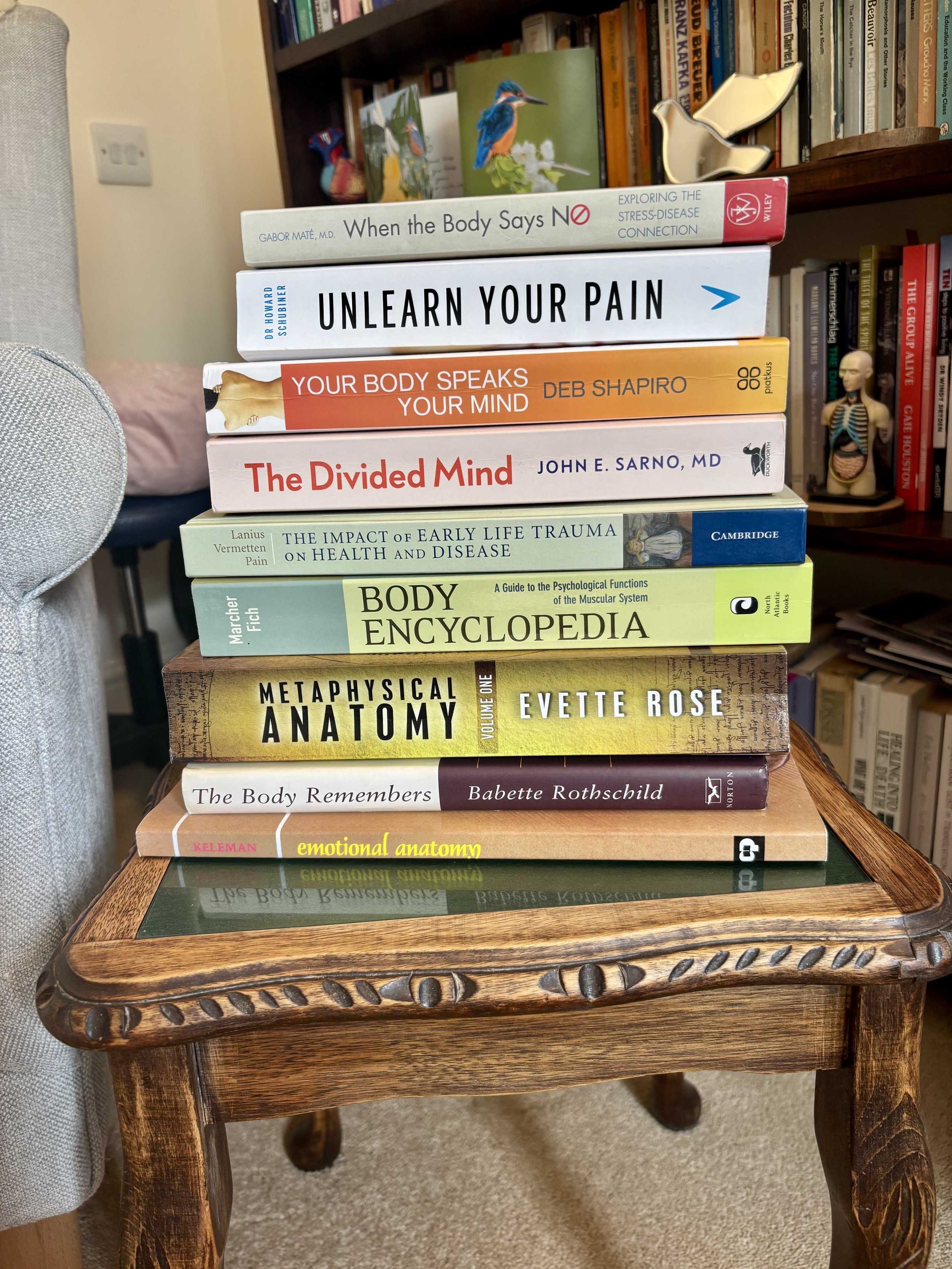
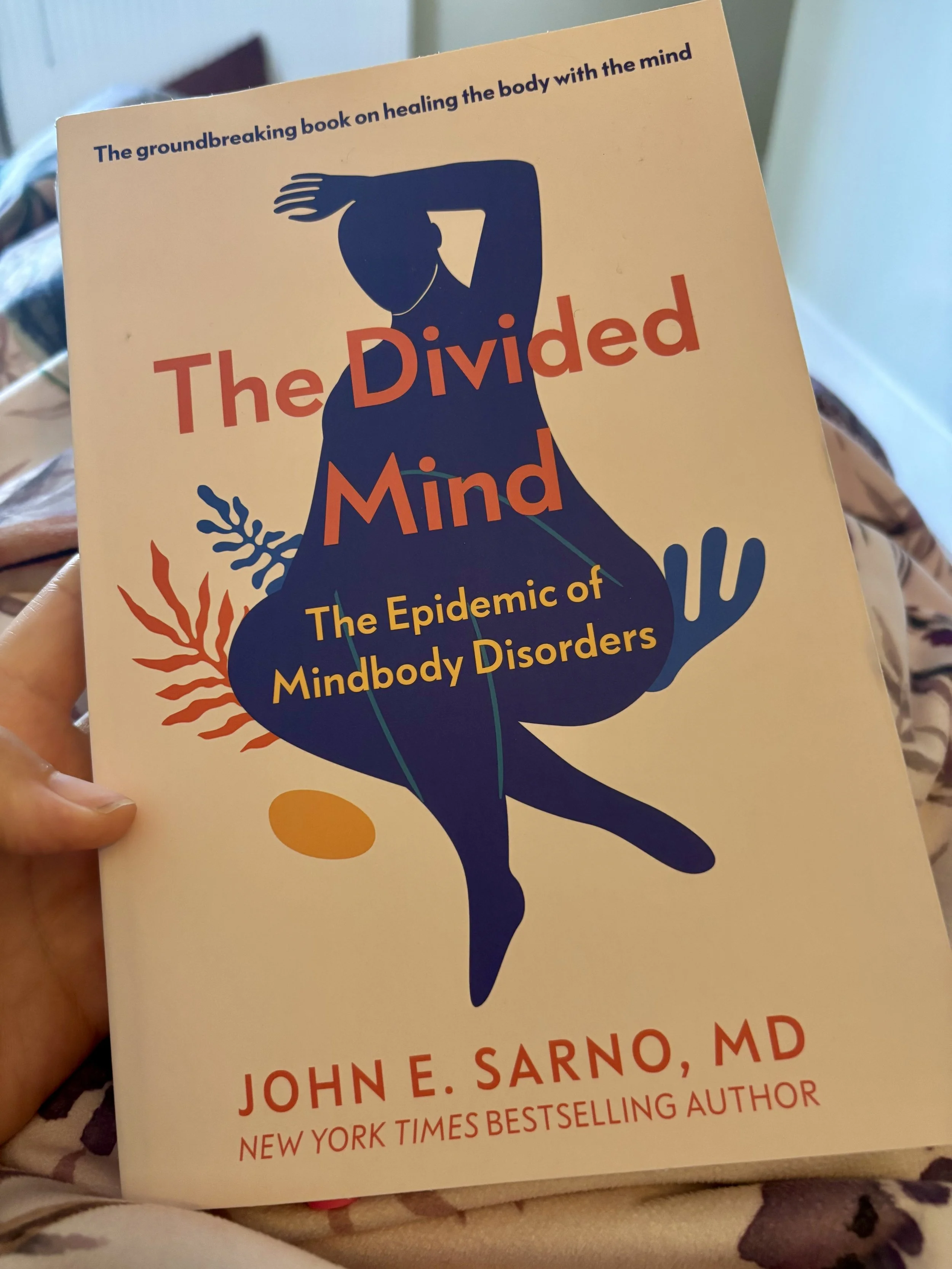
So I have been burrowing away over recent months, researching an area that has been profoundly reshaping how I think about pain, health and the unbelievable intelligence of the human body. I've recently been exploring the work of Dr John Sarno, whose research into what he called the MindBody Syndrome suggested that many persistent physical symptoms are not always the result of structural damage alone, but can also be intimately connected to our emotional inner worlds, that is our feelings, experiences and conflicts that remain unprocessed and continue to live within the body. His work has since been expanded by many clinicians and researchers and while this framework does not explain every illness or every kind of pain, it offers an important invitation, namely, to become curious about the conversations our bodies may be trying to have with us. This invitation feels particularly relevant in midlife, when many women find themselves at a point where the strategies that once enabled them to adapt and cope can no longer be sustained in the same way.

In my work as a psychotherapist, I have spent many years listening to the stories held and expressed through the body. Trauma. Grief. Fear. Shame. Rage. Habitual patterns: The relentless internal pressure to be good, capable, accommodating, to push on and on beyond our limits no matter what. Sometimes clients might be well use to telling these stories, other times, the stories might arise for the very first time in the therapy room. But what I can almost always guarantee, is that most will not have felt the emotions that these stories evoke, even though they know the narrative well. 

We often learn in early life that our emotions, particularly the stickier more uncomfortable ones, are too dangerous, too inconvenient or too overwhelming to express. Usually unbeknownst to us, we become remarkably skilled at unconsciously holding them in, until, one day, the body begins to say no. First quietly with small signals here and there and then, when left unheard, it can begin to amplify into a rage induced scream! This is not a punishment, though it can feel that way. But instead, we might look at it as an intelligent attempt by the body to grab our attention and direct us toward that which is in desperate need of our tender loving care and attention. And for many women, we begin to feel this acutely around the threshold of midlife.

Sagessence or perimenopause is often spoken about in terms of fluctuating hormones, and hormones matter hugely. They influence our brain, our nervous system, our mood, our metabolism, our tissue, skin and as we can all attest, profoundly affect the way we feel. And as well, this season demands something more of us. It unapologetically lifts the carpet to reveal all the shit we've spent a lifetime suppressing and sweeps it right back out again!

So it is no surprise then, that many women arrive in my therapy room exhausted (not to mention depleted of vital minerals and nutrients!). They have spent decades caring for children, supporting partners, building careers, tending ageing parents, meeting everyone else's needs while quietly sacrificing themselves and abandoning their own physical and emotional needs.

But for many of us, sometimes as early as our mid thirties onwards, we find the strategies that once served us begin to lose their grip and the internal pressure we've spent decades containing can no longer be held in. The lid on the pressure cooker begins to rattle and shake! Oestrogen - “the hormone of accommodation” - begins to fluctuate and decline. Progesterone - our happy go lucky buffer - may have already left the building. The perfectionism, the endless doing, the juggling, the pleasing, the self sacrifice, the relentless resilience now all rests on shaky ground. And that scream may begin to express itself as physical symptoms. 

But of course, symptoms are not an inevitable part of perimenopause. I am so very wary of feeding a cultural narrative that has normalised women suffering through this transition - as though it is simply just what happens when we age. Perhaps though, symptoms emerge when our reserves have been depleted, when our old coping strategies are no longer operating as they once were and when our bodies can no longer be so easily overridden or ignored.

So if that pressure is building and symptoms do show up, they may express as chronic pain, persistent fatigue, depression, panic, digestive problems, migraines. cystitis, IBS, skin conditions, brain fog - to name a few. Or maybe just an overwhelming sense that something is OFF. This does not mean these symptoms are "all in your head." Neither does it mean they are all hormonal. Pain is always real, as is a dysregulated nervous system, as is inflammation, as are mineral deficiencies, as are hormonal changes.

But our emotions are biological events too. They also alter our physiology, influence our nervous system, shape our immune responses and affect how our brains process pain. The brain is not simply a passive receiver of pain signals; it is actively involved in creating our experience of pain, sometimes as a protective response to perceived threat - including emotional threat. Contrary to what we are taught in the dominant culture, the mind and body are not separate and our psychology also organises our physiology. 

And perhaps this is why I have come to see midlife less as a “hormonal crisis” and more as an initiation. Initiations by their very nature push us to the edge of our limits so that we may come face to face with ourselves and land upon some deep truths. (I recently wrote more about this archetypal threshold of midlife - the transition into the Mage (wise woman) years - and the invitation this season brings to reclaim the parts of ourselves that have been lost, silenced or pushed into the shadows. You can read that piece here.

So this life phase demands the kind of honesty that many of us may have never even allowed ourselves before. Truths like: Where do I abandon myself? What do I not permit myself to feel? Whose needs do I prioritise over my own? How nourishing and satisfying are my relationships? How do I relate to my anger? What grief have I never mourned? What parts of me remain hidden and invisible? How did I learn to abandon myself? These are not comfortable (or convenient!) questions. But they are a doorway into deeper connection and relationship with ourselves - which is exactly what this mid-life phase invites.

This is where psychotherapy, body based work, time in nature, dreams, creativity, ritual, therapeutic journaling as well as our relationships with plants and animals become such important companions. Because they help us to drop below the busyness of our minds, bring us back into our bodies, cultivate our capacity to listen inward - allowing us to sink into a more contemplative, curious, expansive and compassionate state of being.

 When viewed through this lens, symptoms can be met as messengers from the body; an invitation to sense into our inner emotional world, asking what longs to be known, expressed, heard and felt - now? 

If this Meandering peaks your interest and chimes with your own experience of midlife, persistent symptoms or the deeper emotional landscape of growth and change, you can learn more about my approach to embodied psycho-spiritual psychotherapy and working together here.

Women’s Life Transitions: The Maiden, Mother, Mage and Crone Archetypes

Women’s life transitions can bring profound periods of change, uncertainty and transformation. From menarche and motherhood through to menopause and elderhood, each stage of a woman’s life carries its own challenges, initiations and opportunities for growth. In this latest Meandering, I explore women’s rites of passage through the lens of archetypal psychology, embodiment and psycho-spiritual enquiry, offering a framework for understanding the deeper shifts that unfold as we move through the seasons of our lives.

🪶

The life phases we move through as women have been a growing thread of inquiry in my work. Sitting with women across the decades, from their twenties through to their seventies, I am continually struck by the deeper developmental journey that weaves itself beneath the surface of our individual experiences. While each phase carries its own challenges, initiations and gifts, there is a common evolutionary pattern I observe: the gradual shift from unconscious ways of being, towards conscious embodiment.

In Western culture we have no framework to name or support our initiatory rites of passage - put simply, the different life phases that we move through. We will invariably experience our changing energies, shifting awareness and values as our lives progress and part of that will mean navigating inevitable endings and new beginnings. But, with no framework to hold or contain our experience, it can so often result in a feeling of internal chaos, confusion, victimhood, shame and a feeling of all round destabilisation.

Initiations, by their very nature, push us to the edge of our limits so that we may come face to face with the deeper questions that our lives invite. Working with the different archetypal phases can help give context to our changing experience and having a framework can support us to anchor and centre ourselves, especially helpful for those thresholds, where we find ourselves standing on ever shifting ground.

Below are the archetypal phases that track the general arc of a woman’s life, which may offer a framework that supports you to reflect on your own initiations and to see them as such. The way in which we move through and experience these rites of passage will determine how we emerge out of them. When we live through these phases consciously, with awareness, understanding and compassion, the hope is that we emerge initiated and transformed. However, so often, they go unmarked, unnoticed and oftentimes, unlived. If you’ve learnt - growing up for example - that your worth is attributed to productivity and outward success, then it’s likely your experience may have been different to the archetypal phases offered below. The invitation is to work with this framework to reflect and contemplate your own journey thus far, to notice what feelings are evoked in you and to meet yourself with love, compassion and as always, curiosity.

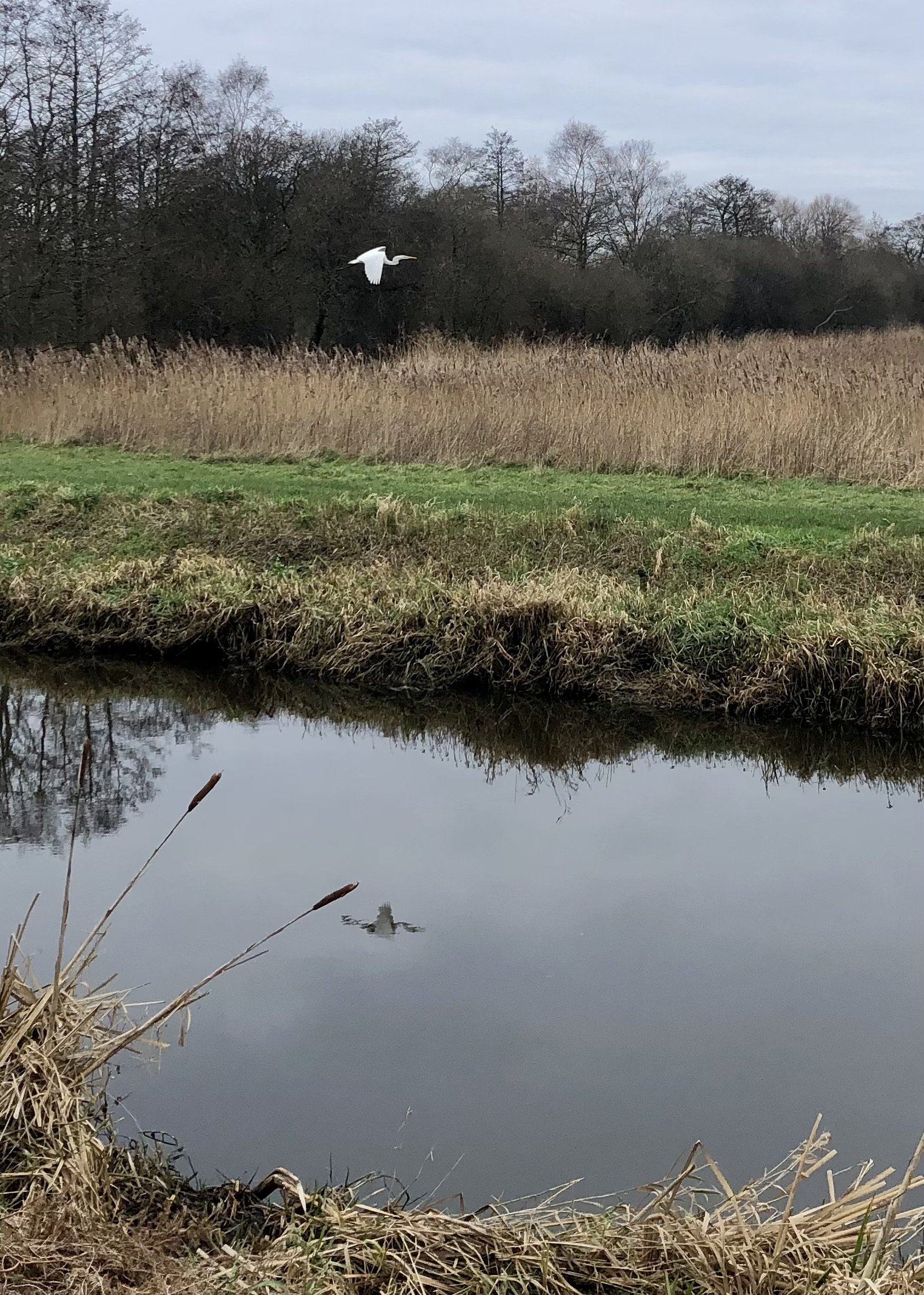
The Grey Heron: A symbol of stillness and liminality, standing between earth and sky, water and land, the known and the mystery. She reminds us that transformation often unfolds in the quiet still spaces - the fertile void - ever pregnant with possibility.

Maiden - Becoming

The Maiden - initiated by her first bleed, menarche - is the archetype of becoming: the woman in the process of discovering herself, her desires, her gifts and her place in the world. She represents possibility, curiosity, imagination and the unfolding of potential. Her journey is one of exploration and she holds the tension between following her impulses - her budding freedom and autonomy - whilst becoming conscious of the pressures of adult life.

The Maiden is not simply a symbol of youth, but of new beginnings. She lives within us whenever we enter a new chapter, embrace a new identity, or step into the unknown. Her medicine is openness: the willingness to wonder, to experiment, to play without agenda, the freedom to follow the call of life before certainty arrives. She reminds us that becoming is never a destination we arrive at but a lifelong process of continual renewal. Her season is Spring.

The Shadow: When the Maiden is not fully initiated and our sense of worth has become enmeshed with service, caregiving, achievement or meeting the needs of others, we may enter adulthood carrying a tension we cannot yet name. Rather than finding expression through words or conscious awareness, this unresolved burden often speaks through the body and psyche, showing up as anxiety, depression, eating disorders, chronic stress, burnout or physical symptoms that quietly nudge us towards what remains out of balance and in need of attendence.

Mother - Creating and Sustaining Life

The Mother archetype represents the creative and life-giving forces within a woman. While she may be expressed through the literal experience of bearing and raising children, her deeper meaning includes and extends beyond biological motherhood. The Mother is the one who nurtures, tends, creates, protects and brings something new into being - whether that is a child, a relationship, a body of work, creative project, a home, a community or a vision. She is deeply intuitive, creative, and at a cellular level, knows she is symbiotically interconnected with the Great Mystery from where all life springs forth.

The Mother teaches us the wisdom of tending. She knows the rhythms of growth, patience, sacrifice and surrender. Yet her initiation is also one of discernment: learning where her giving nourishes and where it depletes her. In her fullest expression, the Mother does not abandon herself by merging into service of others, but discovers the balance between loving deeply and remaining rooted in herself. Her season is Summer.

The Shadow: When the Mother remains uninitiated, we may find ourselves frequently tipping into victimhood, feeling martyred by the expectations and demands of life. We may feel depleted, spinning all the plates whilst living way beyond our limits. We struggle to attune to what we need, assert boundaries and instead habitually prioritise the needs of others, likely begrundgingly. Her intuition and discernment may not be within easy reach, instead guilt, shame and an undercurrent of rage may be the organising emotions of this life phase.

Mage - the sorceress! Initiation into Sovereign Feminine Power

*The Mage marks a profound threshold: the transition beyond the years of fertility and the beginning of a new relationship with power, identity and purpose. Rather than moving directly from Mother into Crone, this archetype recognises midlife and sagessence (menopause) as its own initiation - a time of transformation, shedding, integration and awakening.

The Mage is the woman who has gathered the experiences of her earlier life and is now called to reclaim what may have been lost, silenced or given away. She no longer measures herself through her capacity to nurture, please or fulfil external expectations. She begins to stand in her own authority, guided by inner wisdom rather than external approval. She knows she is of worth simply because she lives and breathes. Her worth is no longer enmeshed in pleasing, achieving or being of service to others.

The passage through this mid life threshold can be understood as an initiation into sovereignty: a stripping away of old identities and an invitation to live more truthfully, more fully, more soulfully. The Maga is passionate, discerning, creative and unapologetically herself. She brings the gifts of experience together with the courage to begin again, not as the woman she once was, but as the woman she is becoming. Her season is Autumn.

The Shadow: When the Mage remains uninitiated, menopause can become a time of confusion rather than transformation. As old identities begin to fall away, a woman may cling to the roles that once gave her purpose or continue to seek her worth through caring for others, productivity or external validation. Rather than reclaiming her authority and her burgeoning new direction, she may feel lost, invisible, resentful or deeply untethered. This inner conflict can express itself through anxiety, depression, shame, rage, exhaustion or a profound sense that life no longer fits - that she no longer recognizes herself - which further exacerbates a feeling of internal and external destabilization and chaos.

*The MAGE was introduced and included in the arc of a woman’s life by Jane Hardwicke Collings.

Crone - Elderhood, Wisdom, Stewardship and Transmission

The Crone represents the ripened wisdom of a life fully lived. She is the elder, the keeper of stories, the one who has walked through many seasons of change and carries the medicine of lived experience. Her wisdom is not acquired through knowledge alone, but through having met life’s joys, losses, initiations and weaves its many mysteries into a colourful and unique tapestry that she wears as a cloak of protection.

The Crone turns towards stewardship and transmission: sharing what she has learned, guiding those who come after and tending the wider web of life with a straight forward, grounded way of being. She understands that wisdom is not something to possess, but something to offer, model and/or share. Her gifts are perspective, compassion, discernment and the ability to see beyond the urgency of the moment and to trust in Life itself.

The Crone reminds us that ageing is not a diminishment but a deepening into being and presence. She embodies the return to essence - a woman no longer defined by society, by what she produces or provides, but by the presence, insight and love she brings to the world. Her season is Winter.

The Shadow: When the Crone remains uninitiated, growing older can become synonymous with loss rather than a growing sense of liberation. A woman may resist the ageing process, grieve the passing of youth without embracing the gifts of elderhood or withdrawing from life and isolating herself, believing the cultural narrative that she has little left to offer. Without the conscious integration of her lived experience, she remains disconnected and her wisdom is eclipsed by disappointment, bitterness or regret.

. . . .

To deepen into this archetypal work, you may be interested in exploring the work of fellow elders:

Marion Woodman

Jane Hardwicke Collings

Sharon Blackie

Clarissa Pinkola Estes

And of course, if you are navigating a significant life transition, feeling disconnected from yourself or feeling called towards a deeper understanding of your inner world, you can explore more about my approach to embodied psycho-spiritual psychotherapy here.


The Hopeless Gardener

(First shared with my newsletter community in May 2026)

Here I explore gardening as a psycho-spiritual practice, reflecting on themes of play, uncertainty, embodiment, nervous system regulation and the relationship between humans and the natural world. It considers how tending a garden can mirror emotional development, resilience and the capacity to live in dialogue with change.

🪶

If you can believe it, we have already reached the mid-point between the spring equinox and summer solstice and I am feeling endlessly inspired by the blooming flowers, shrubs and trees and the emergence of insects and wildlife. As usual, I am spending a lot of the time in my garden, filling in gaps left by the fading spring bulbs, bringing in more colour and of course, continually harvesting herbs for all of my potions. And all this has got me thinking about a woman that contacted me recently on Instagram, calling herself a hopeless gardener. That title really struck a chord. I remembered a time, not that long ago in my tiny London garden, where I too would've called myself a hopeless gardener, telling myself that every plant I touched would die. So I gave up trying. 


Then I moved to Somerset, where I became the custodian of a much much bigger garden. And this garden spoke to me in a way I'd never experienced before. So I picked up the baton and attempted to garden again, only this time, I got to make a lot more mistakes and kill many, many more plants! Over the three years that I've been here I've learnt something invaluable; that making mistakes has actually made me a pretty good gardener!

Gardening has taught me to play, to experiment, to adapt and learn from all the many so called failures that can and do take place, often. From planting things in the wrong place, to planting the wrong plants for my soil, or innocently sowing hundreds of Foxglove seeds without realising they would grow into hundreds of Foxglove plants (Hundreds!). The list of mistakes I've made is endless, but without those, I don't think I'd ever have learnt what my garden likes and what certain plants need in order to grow and thrive.

 Gardening has become a semi blank canvas, a place to play and co-create. You can't force a garden to grow, you have to work in relationship with the soil, the weather, the insects, the wildlife. I've since learnt that you have to listen to the needs of the plant and the surrounding environment, and that listening takes time - perhaps a whole year cycle (or three) of playing, listening, experimenting, making mistakes, noticing and learning. Mistakes then, when infused with play, just becomes information to learn and grow by.

Play is intrinsic to our emotional development and mental health. Through play we develop mental resilience, emotional self regulation, learn the art of relational negotiation, reciprocity and the capacity to adapt and grow with flexibility. And gardening offers us a space to play without the high stakes that we feel can so often dominate our lives in adulthood. And I'm not just talking big country gardens. I grew up in a one bedroom council flat in Holloway where my Mum played endlessly in creating a colourful garden on our tiny shoebox balcony. A window box or a plant on a window sill can still offer us some opportunity to play and co-create with nature.

The other thing I've learnt is how building this capacity to play in the garden spills out into other areas of my life. Namely, it has helped me build the muscle to let go of time frames, to loosen the reigns, to hold my plans lightly, not worry so much about how things will work out and importantly, to trust in life's own mystery and its knack of holding us, supporting us and giving us exactly what we need so that we may also continue to grow and bloom.

So the hopeless gardener now becomes a wild and playful creative genius! Ok, I may be over egging it slightly but I hope you catch my drift. If I were to take the judgement and criticism out of the term “hopeless” and find the nugget of truth that lies beneath it, I might call it something like feeling unconfident, ill equipped or uncertain. And actually, these are all excellent qualities to have as a gardener, because they make you a humble collaborator, someone willing to cultivate uncertainty rather than trying to control every outcome.

To garden from this place is to stay open, curious and responsive. It means you are not forcing life into a fixed and rigid plan but instead, are entering into relationship with it. Uncertainty invites experimentation; lack of certainty creates room for play. And at this time of life, in the world, with all its insanity and horrors - cultivating uncertainty, playing, creating, imagining, slowing down and regulating are all brilliant gifts that the garden offers us freely and in abundance.

The Midlife Threshold: Perimenopause, Ritual and Nervous System Recalibration

This Meandering explores perimenopause, circadian rhythm shifts, nervous system regulation and the emotional and physiological transitions that can arise during midlife. It follows on from last months field note; The Seventh Sense of Awe and Wonder. It reflects on embodiment, ritual and the changing relationship between menstrual cycles, sleep patterns and natural rhythms.

🪶

Last week’s Summer Solstice marked the 5th week of my continued Sunrise experiment, which I shared in last months letter; endeavouring to shift my circadian rhythm and sleep cycle into a more predictable and regulated pattern. And I'm continuing to notice many remarkable and surprising benefits as a result of my new daily practice. I'm still relishing my reduced phone and screen time but something else has emerged, something that feels altogether life changing and profound…

At 48, I am moving through the threshold of a seasonal shift - Sagessence or perimenopause as it is more widely known. If you are moving through similar shifts - whether in perimenopause, experiencing other midlife transitions or other periods of embodied change - you may well recognise something of your own experience here. As my menstrual cycle continues to change and is no longer the predictable anchor it once was, I have at times found myself feeling set adrift. The inner seasons I once knew and organised my life around are no longer distinct or obvious and my relationship with the lunar cycle, once my cyclical north star - particularly around my ovulation and bleed time - began to fade from my awareness. This liminal state can feel destabilising for many, like being rudderless in a turbulent sea with no calm end in sight. Thankfully, I know the containing power of a good old ritual, so it has been a question of finding some new ones to hold me through this transition. 

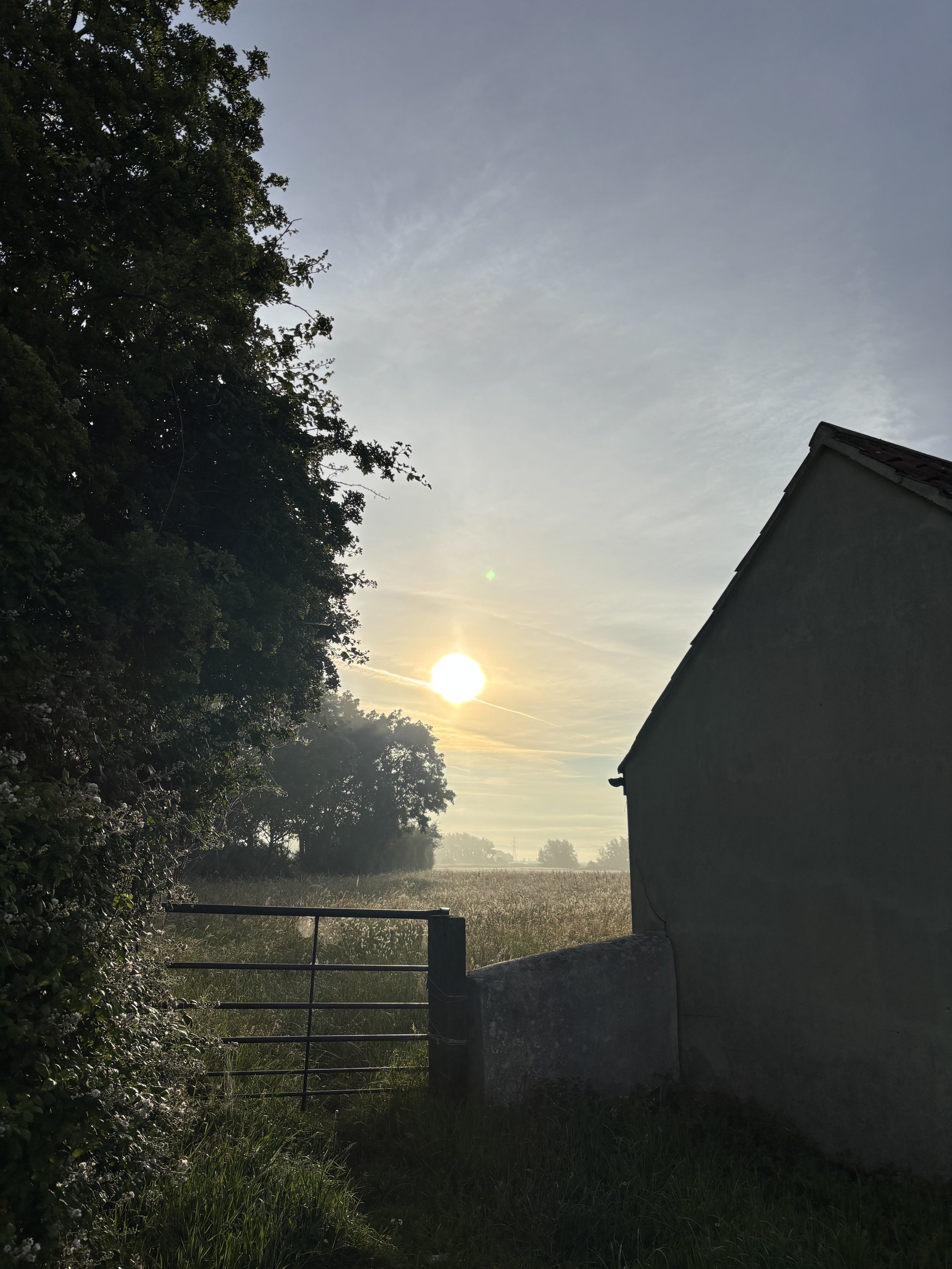
Recently, as I sat in my garden at dawn, in front of a misty blood red sunrise slowly burning its way into view, I looked behind me and saw a waning crescent moon sparkling in the morning sky. I was sat slap bang in the middle of both Grandfather sun and Grandmother moon. In that moment it dawned on me (pardon the pun) that not only am I being held by both feminine and masculine archetypal energies - the elemental life giving vital energies of the natural world - but it has become clear that a new cycle is taking precedence in my life: My menstrual cycle is now giving way to the circadian cycle of night and day. My body is craving natural light, regularity and rest. Days are consciously and predictably bookended by the rising and setting of the sun and held within the soft, diffuse energy of the moon. And what I am noticing is a profound shift into slowing down. Instead of the monthly cycles of peak energy and creativity that typically coincide with ovulation, my body now seems to be orienting toward what is simple, easeful and deeply restful - most of the time. Those peak phases have softened and waned and while there are moments when my Aries self and inner critic like to protest and insist I should be doing something - anything! - my slowing body and soul are increasingly running the show and thankfully, are very well versed in saying “thank you very much, but NO.”

I shall be sat in this chair staring into space for the next five years, should anyone need me.

In practice, so far, this has meant honouring a new rhythm and keeping firm boundaries around when I go to sleep, rise and eat. It is simple and basic, in the most primal “meeting my most basic needs” kind of a way. And at the risk of using an overused word, it feels ancient and remembered, as though my body is returning to something it has always known. And of course, it has. 

This new ritual is surprisingly and unexpectedly helping my changing body adapt to the choppy waves that this initiatory phase of life inevitably brings forth. My breathing is spontaneously deeper and fuller - without force, I'm less irritable, far more present, quiet and I'm feeling altogether softer, slower and more diffuse. The noise of the outside world has fast diminished into the background, I'm stripping life back and my attention is now focused on the basics. And these are the gifts that I believe this mid life phase demands of us; simplicity, presence, spaciousness and kindness, so that we may have cultivated enough space and stillness to truly listen to our needs and attend to them without criticism or judgement but with loving kindness and care. 

If you are interested in the psycho spiritual alchemical nature of women's life phases, I highly recommend the work of wise elders, Jane Hardwicke Collings of Shamanic Womancraft and Alexandra Pope and Sjane Huge Wurlitzer of The Red School. And, if you are moving through similar waves of this life phase and would like to explore therapeutic support, you can read more about working with me here.

The Seventh Sense, of Awe and Wonder

A reflection on nervous system regulation, digital overwhelm and reconnecting with presence and embodied awareness.

🪶

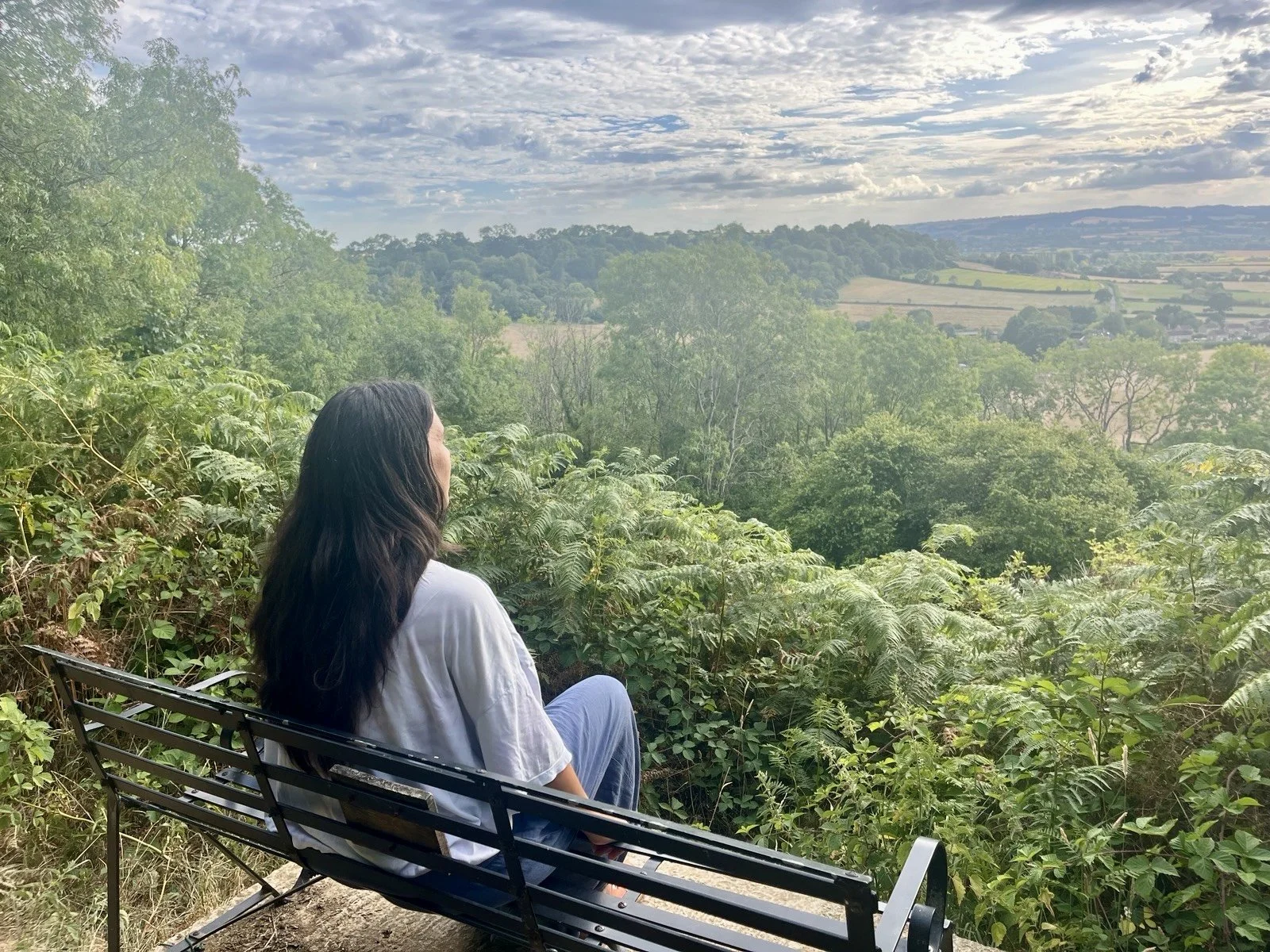
As I sat in my garden this morning, long before any of my other humans began to stir, I found myself contemplating the possibility of a seventh sense: the sense of awe and wonder.

I thought about my life and the practices that have helped restore this sense within my own body and life. There have been the big, life changing practices - the ones that have become steadfast anchors, helping me drop beneath the maddening noise of the modern world and into a deeper inner spaciousness, where the quiet beauty of life becomes easier to notice and receive.

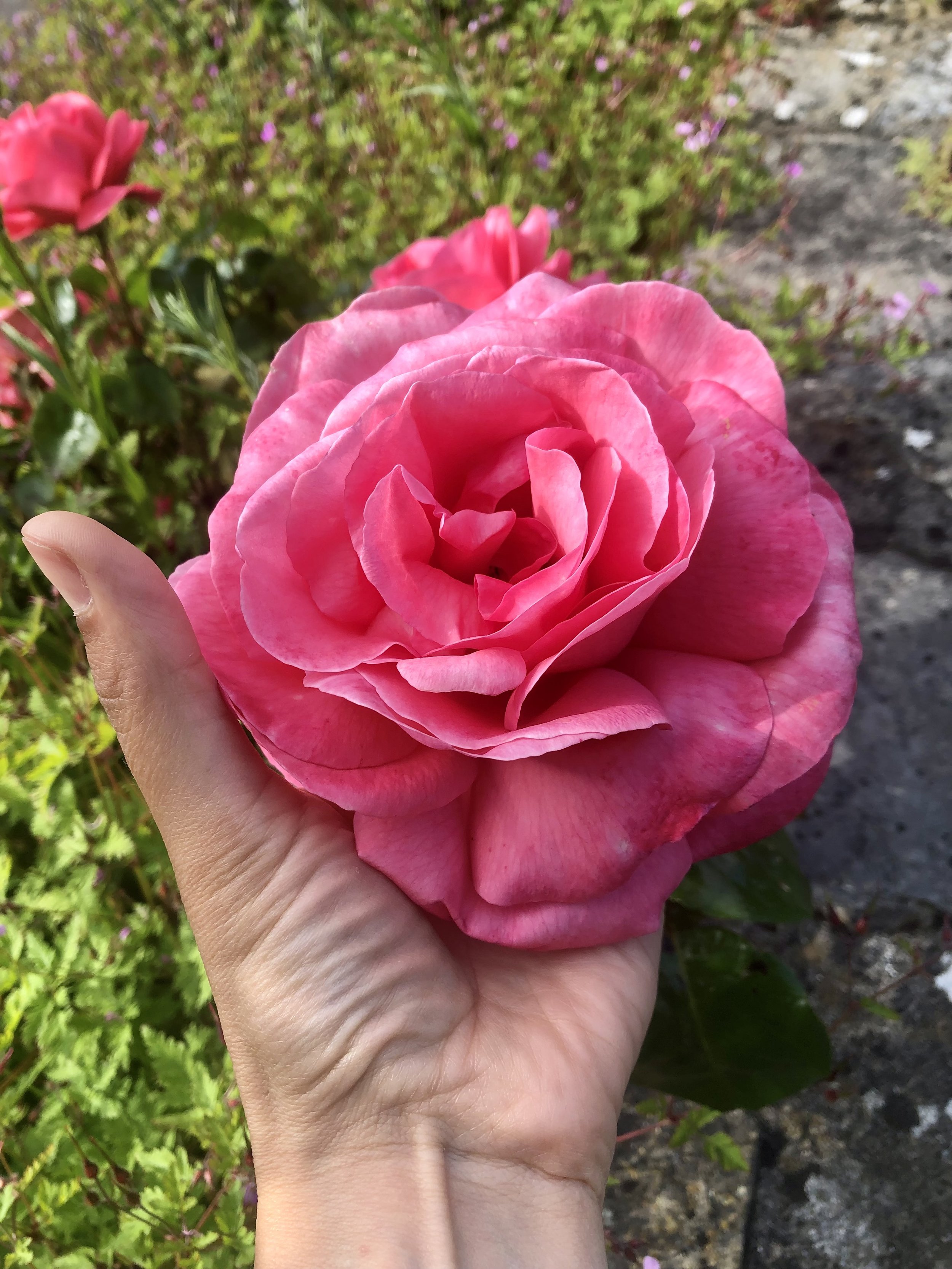
 And then there are the small, simple things. The old adage, "stop and smell the roses," comes to mind. What a season summer is for that, offering endless invitations to notice the beauty all around us. I also know a common reality for many of us: when our nervous systems are overworked, overwhelmed and depleted, we may not even notice the roses, let alone feel inclined to stop and smell them.

My nervous system is no exception.

So lately, I've been experimenting with a new practice: going outside at sunrise. No phone. No distractions. Just me and the elements. I began with the intention of supporting my nervous system and reconnecting with my natural circadian rhythm but the most surprising result has been what happens afterwards. After sitting with the rising sun, listening to the dawn chorus and soaking in a period of much longed for quiet, I find I don't really want to go on my phone. Scrolling feels almost intolerable. Even responding to texts feels like hard work. What I've become aware of is how agitated my body feels when I'm on my phone, even for a minute; the exact opposite of how it feels sitting in the garden, taking in the sights and sounds of the first morning light. Many of us are experiencing similar patterns of nervous system overload, digital overstimulation and disconnection from our bodies and natural rhythms.

“Lose Your Mind And come To Your Senses”

Fritz Perls

And so I'm reminded that cultivating this seventh sense requires internal space. Nowt flashy or grand but enough room to actually experience the quiet beauty of the world and drink it in. The surprise has not been that awe and wonder deepen when I sit and greet the sunrise. The surprise has been the ease with which I've begun waking at a previously unthinkable hour and the even greater surprise of watching a long established phone habit begin to loosen its grip without force or effort.

And maybe that's what happens when we give ourselves over to beauty more often. Though of course, it's not just beauty alone having an impact, it's the biochemical wisdom of nature and bodies mingling together in the healing rays of the morning light. But, what began as a simple sunrise practice has opened up more inner space, a deeper embodied experience of wonder and an organic shedding of habits that don't serve our sensual, living, animal body's.

So now I'm fairly convinced that awe and wonder qualify as a seventh sense! And I'm excited to see where this little sunrise experiment takes me next. Fritz Perls’ “lose your mind and come to your senses” is another phrase that springs to mind. It’s been a good, reliable phrase to live by.

If you are exploring similar themes of anxiety, burnout, disconnection, or low self-worth, I offer psychotherapy for women navigating trauma, overwhelm, and life transitions. You can read more about working with me here.

This Field Note was first shared with my newsletter community.

The Cycle of Experience

Why Do I Ignore My Own Needs? Understanding the Gestalt Cycle of Experience

Many women come to therapy feeling disconnected from themselves. They know something is wrong but struggle to identify what they need, what they feel or why they continually override themselves. One of the models I find most helpful for understanding this is the Gestalt Cycle of Experience. It offers a simple yet profound way of understanding how we lose contact with ourselves, and crucially, how we begin to find our way back.

The Cycle of Experience is a metaphor we use in Gestalt therapy that helps us to raise our self-awareness. It also helps us better attune to our embodied experience in the present moment. It is a simple way of exploring how we meet and respond to sensations and energy as they rise up in our body and where this process might get stuck or interrupted. Sensations and energy often signal to us a need that we have, or a desire, excitement, a want, or longing. This is a particularly useful model to work with if you feel disconnected from these parts of your experience, or if you struggle to listen to yourself and your body and find yourself moving through life on autopilot. This is something I often explore with women in psychotherapy, particularly those recovering from developmental trauma, chronic people pleasing, or are suffering under the weight of a harsh inner critic.

To bring it to life, I’ll use the diagram below to illustrate what it’s all about and how it can be of benefit to us in our lives.

An Illustration: Attending to Needs

I’m going to use the simple example of thirst.

At the bottom of the cycle, you will see what we refer to as the fertile void. This is a place of peace and quiet; it can be still and empty where no needs or sensations are pulling for our attention. In the fertile void, the ground may be still and quiet but it is pregnant with possibility. It is the liminal space from which all life springs forth.

So here, in this space, I am quietly present to myself and my experience when a sensation makes itself known, I notice my throat is dry. My awareness is activated as I realise that I am thirsty. My body then mobilises and I get up and move into action, locating my water and drinking it. This is the phase of contact. I am in contact with my need and am attending to it, through my contact with the environment (finding water). And, as my body assimilates the water, my thirst is quenched and I can now rest back, satisfied. As I am no longer thirsty, I am able to withdraw and sink back into the quiet stillness of the fertile void. Nothing to do, nowhere to go, just quietly present, satiated, until the next sensation emerges and pulls my attention, informing me of a call to action.

Some cycles may complete in a moment, like in the above example and others may take years to complete. Many of our needs will be complex and some may be abandoned before they’ve reached completion. And, we will have many cycles of experience happening at the same time, as well as competing and conflicting needs, which inevitably bring further layers of complexity. The invitation here is not to act on every single sensation, impulse, desire or need as they arise, but to simply raise our awareness around having needs in the first place, how they show up in our body and how we go about meeting them and integrating them…or not.


Interruptions To The Cycle

Typically we tend to get stuck at certain phases of the cycle. If for example, I am not used to inhabiting my body; if I have a tendency to disassociate or if I am consumed by my busy thinking mind, chances are I may not notice a sensation arising in my body and may well miss the signals of what it is my body is communicating in any given moment. Or maybe I learnt in my early life that my needs or my own impulses, for example, were not important and so I will have likely disconnected from any sensation that signals a need because as a child, it might have been the safest thing to have done. So it might be that I don’t even notice my needs, until something forces me to; maybe I feel delirious or faint and realise I haven’t eaten for hours or my entire body crashes after a prolonged period of high stress and then, burn out.

Or, maybe I am well aware of sensations as they arise in my body but perhaps, due to beliefs I hold about myself, I may not be able to mobilise enough energy and power to take action. If for example, a job opportunity comes along and I feel my initial excitement (sensation) but then think “urgh, I’m just not experienced enough, there’s no way I can do it,” my momentum, energy and power will likely collapse and keep me stuck in one place, unable to move forward into action and satisfaction, disrupting full completion of the cycle.

Additionally, in the dominant western culture, we are encouraged to live and work in a linear way with a heavy emphasis on busying and doing. Many of us can get stuck in the peak phase of the cycle - in sensation and action - moving on to the next thing, the next thing, the next thing with immediacy and speed. In so doing, we rob ourselves of the experience of assimilation, of satisfaction and of rest - experiences that ordinarily come once you’ve experienced the triumph of having completed a task or fulfilled a need, How often do you catch yourself thinking, shit, I’ve just been through something huge and I’ve just moved on to the next thing without so much as stopping for breath!” And rest doesn’t have to be anything big or elaborate. I’m not talking about having to spend the day at a spa every time you complete a task (though wouldn’t that be nice!?). But just a simple acknowledgement of a cycle having been completed and seeing what it’s like to simply pause, breathe and listen quietly with an inner ear. That might be enough to activate your parasympathetic nervous system, supporting you to release a longer, deeper out breath. It might be all the rest you need. Or you might need more depending on the cycle you’re moving through.

Presence

The beauty of allowing ourselves more time to complete the cycles of our lives, is that we can slow down a little, we can become more present, more attuned to our needs, to our cyclical rhythm and we get to experience the creativity that is inherent within the fertile void. When I can take the time to fully assimilate and integrate an experience, and perhaps the accompanying trials and tribulations that I had to navigate as part of it, real learning and growth is cultivated. Becoming attuned to our own cycles and taking the time to complete them consciously - that is, allowing both contact and withdrawal - means we also cultivate more spontaneity and more aliveness into our system. Ordinarily, we may have the experience of being organised by old habitual patterns where our senses can become dulled and we find ourselves moving through life on auto-pilot. And, who knows what new novel sensation may arise, what new experience life may be inviting us into if we pause and give ourselves a little more space to be present to the rich and varied cycles of our experience?

Deepening enquiry and journaling prompts:

If you are curious about how you relate to your own sensations, needs, impulses, desires, you may find the following prompts useful to contemplate…

  • What phase of the cycle do you find yourself in most often?

  • Do you get stuck in any particular phase?

  • How does getting stuck there impact you and your life?

  • What does it cost you?

  • What are the hidden benefits?

  • What stops you from being able to flow into the next phase?

  • What core beliefs, values, introjected (should) messages interrupt you from completing each full cycle of experience? `

If you recognise yourself in these patterns, know that they often have deep developmental roots. Learning to reconnect with your body's signals, trust your own experience and complete interrupted cycles is central to the therapeutic work I offer. You can read more about working with me here.

Ancestral Healing

Many of the women I work with come to therapy carrying patterns that feel older than their own life story. They may struggle with persistent anxiety, self-doubt, relationship difficulties or recurring fears that seem difficult to explain through their personal experiences alone. In this Field Note, I explore the idea of ancestral legacies and how intergenerational patterns may shape our emotional lives, while inviting curiosity rather than certainty.

🪶

I have been deep in Winter hibernation mode which always brings with it a swell of creativity and a deepening connection to the unseen worlds. And so it is only fitting that the theme of ancestral legacies has been bubbling away in the cauldron and also, as life mirrors our internal worlds, I've been working through some sticky ancestral trauma with clients. 

And so, the question keeps arising: How do you know if what you're experiencing - habits, patterns, physical symptoms - have their roots in your life, or in someone else's life who has gone before?

I remember sitting in supervision back in the early days of my training. My Supervisor was big into family constellations and was exasperated at me never enquiring into my clients ancestral history. I didn't get it. “But no one remembers anything or has any access to the past, so where do I even start?” I don't remember her ever giving me an answer, though she simply continued to encourage me to stay curious. 

Now, some fourteen years later - having studied, been through my own journey of ancestral healing, and having worked with many many more clients - I have a much clearer idea. 

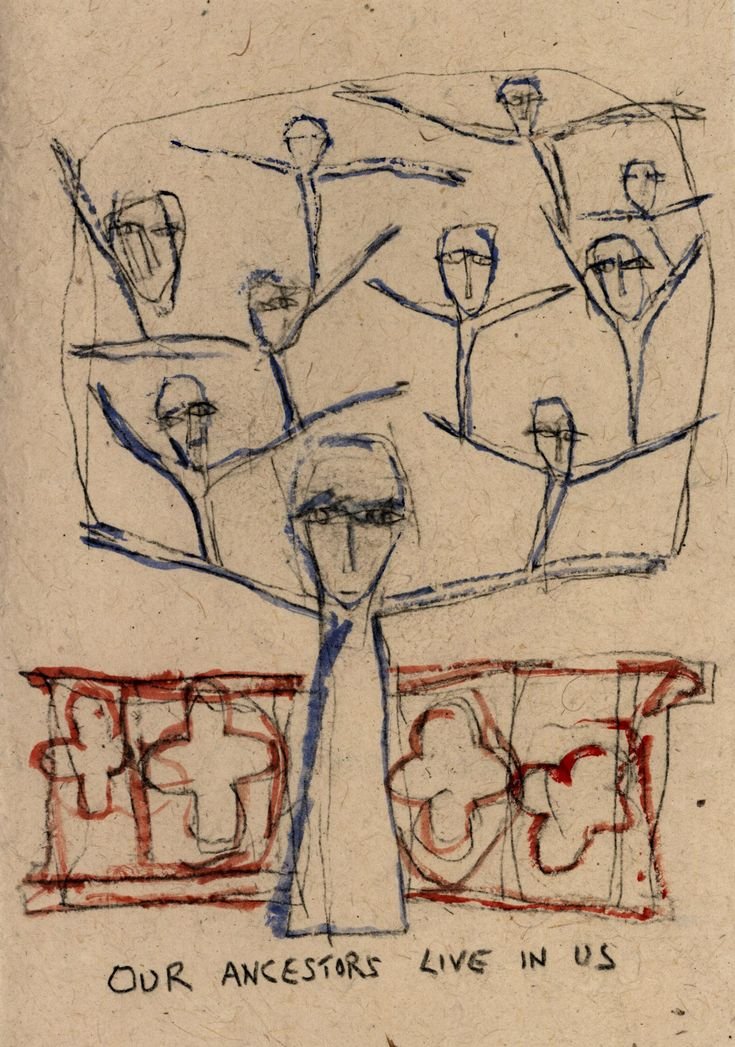
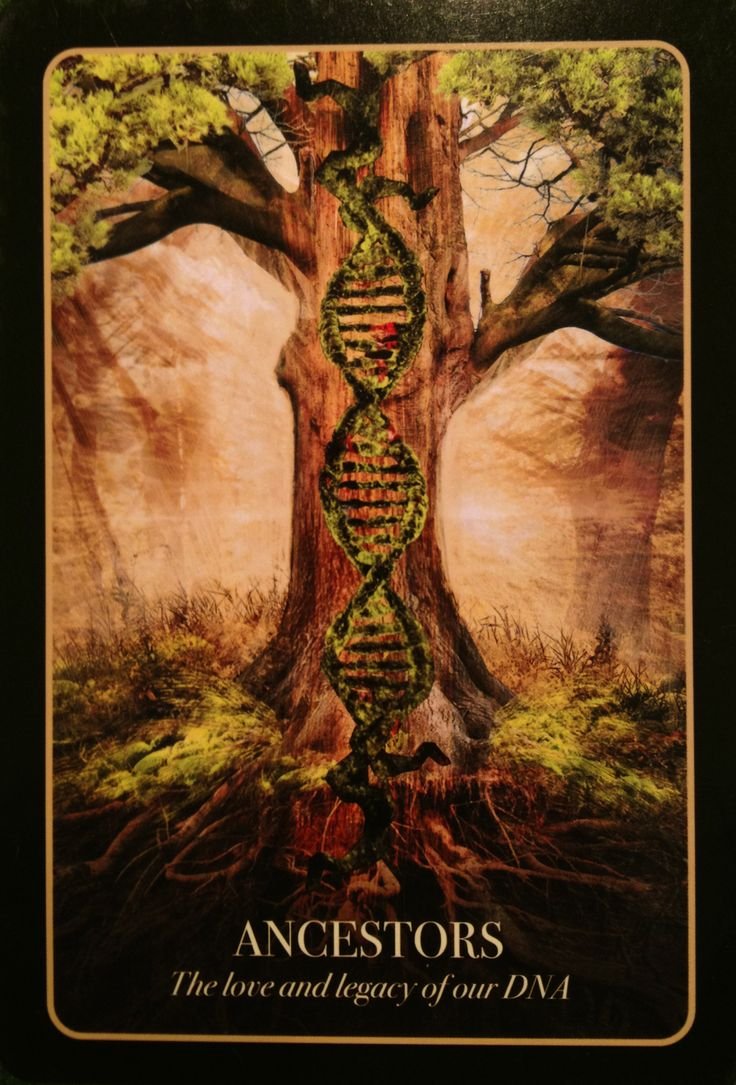
We inherit the lived experience and memories of our ancestors through our own genetic coding. We are the living breathing continuation of our ancestors! And all of our ancestors, at some point through time, will have lived through war, famine, enslavement, invasions, subjugation and all manner of horrors. These implicit memories are passed down to us and remain dormant and stored within our cells until some event in our lifetime comes along and flicks the switch - turning the memory back on again. And so we move through life re-enacting aspects of our ancestors experience or trauma, even though the original historical context is no longer in our conscious awareness.

So here are a few clues to support your own enquiry. If you've ever had the sense that a recurring pattern, fear or emotional burden didn't begin with you, these reflections may help you discern whether you are carrying something that belongs to a deeper ancestral legacy.

1) When there is some seeming discrepancy in your experience, i.e.  when there is a pattern or recurring theme in your life that you just can’t make sense of in relation to your own life and it is confusing! Confusion is a big clue! 

2) When patterns and themes feel heavy, immovable and rigid.

3) Recurring and persistent physical symptoms that you just can't get to the root of.

4) You may use big emotive statements to describe your worst fears - e.g. I will die if… / I'll be completely alone / I'm going to be punished or killed / It'll be all my fault / I'll lose everything / People will find out how bad I am / I'll feel completely suffocated / I'll be hated / I'll go crazy etc..

If you have a sense or even a clear knowing that what you're experiencing didn't originate with you,  it can sometimes be enough to simply acknowledge it - setting the intention that you will no longer be the carrier of it. Sometimes that alone will help loosen its grip. It also helps to bring in compassion and care. Oftentimes compassion, love and understanding are the very qualities that were missing at the time and are now needed to transmute the pain and integrate it. And perhaps it is you who is tasked with that job now, in this lifetime! 


Other times, you may want to take the work further by working through the ancestral memory with someone experienced in the field or if you’ve already cultivated a relationship with your ancestors, calling them in to support you through the process.

And of course, we do not only inherit trauma! We also inherit all the wonderful creative resources our ancestors embodied. In fact, the more we are able to alchemize the pain and release ourselves from the hardship of their experience, the more internal space we have to integrate all their strengths and life affirming qualities.

Whatever path you choose to take, life always does us the wonderful favour of bringing events and situations that invariably help us to heal and evolve - growing beyond the constraints of our pasts. And so we will inevitably keep repeating patterns and reenacting old family traumas until we catch them and then, once we have this in our awareness, we can endeavour to do something different and lay the past to rest - honouring their lives by living fully, joyfully and unapologetically, now. This is the work of ancestral healing. 

If these reflections resonate with you, you may be noticing patterns that feel difficult to understand or shift on your own. This is something I often explore in psychotherapy with women navigating developmental trauma, low self-worth, life transitions and recurring relational patterns. If you would like to learn more, you can read about working with me here.

Working with the menstrual cycle - a brief how-to guide for therapists

Here are two articles I was recently invited to write for pesi.co.uk on working with the menstrual cycle in therapy and how to approach it as a therapist. Enjoy….

Working with the Menstrual Cycle 1/2: Embodiment and Empowerment

https://www.pesi.co.uk/blog/2023/february/working-with-the-menstrual-cycle-1-2-embodiment-an

Working with the Menstrual Cycle 2/2: Understanding the Four Phases

https://www.pesi.co.uk/blog/2023/march/working-with-the-menstrual-cycle-2-2-understanding

What is Therapy?

We make space for contemplation and curiosity.

We slow down so that we may meet ourselves deeply and intimately.

We cultivate uncertainty and we begin to unfurl from a lifetime of holding ourselves together.

We deconstruct.

We let go.

We surrender.

And then we see our Ego mind dancing its merry dance before our very eyes and we see the dance we do every single moment of every single day with renewed clarity.

And we wonder how we have done this dance, asleep, our whole lives.

How?

And in our commitment to realising and seeing and asking, the dance begins to change.

Slowly, back and forth, side to side.

We learn new steps.

We trip, we knock our knees, we fall and graze our shins and we get up and practice the new steps again and again until the old steps fall out of step and this old rhythm no longer fits our body.

And then, maybe after months or years of learning this new dance, the daffodils begin to bloom, the light streams in and you catch your reflection and without thought, you feel a surge of warmth in your belly and heart and you simply,

without protest,

love who you are and love what you see.