
(First shared with my newsletter community in May 2026)
Here I explore gardening as a psycho-spiritual practice, reflecting on themes of play, uncertainty, embodiment, nervous system regulation and the relationship between humans and the natural world. It considers how tending a garden can mirror emotional development, resilience and the capacity to live in dialogue with change.
🪶
If you can believe it, we have already reached the mid-point between the spring equinox and summer solstice and I am feeling endlessly inspired by the blooming flowers, shrubs and trees and the emergence of insects and wildlife. As usual, I am spending a lot of the time in my garden, filling in gaps left by the fading spring bulbs, bringing in more colour and of course, continually harvesting herbs for all of my potions. And all this has got me thinking about a woman that contacted me recently on Instagram, calling herself a hopeless gardener. That title really struck a chord. I remembered a time, not that long ago in my tiny London garden, where I too would've called myself a hopeless gardener, telling myself that every plant I touched would die. So I gave up trying.
Then I moved to Somerset, where I became the custodian of a much much bigger garden. And this garden spoke to me in a way I'd never experienced before. So I picked up the baton and attempted to garden again, only this time, I got to make a lot more mistakes and kill many, many more plants! Over the three years that I've been here I've learnt something invaluable; that making mistakes has actually made me a pretty good gardener!
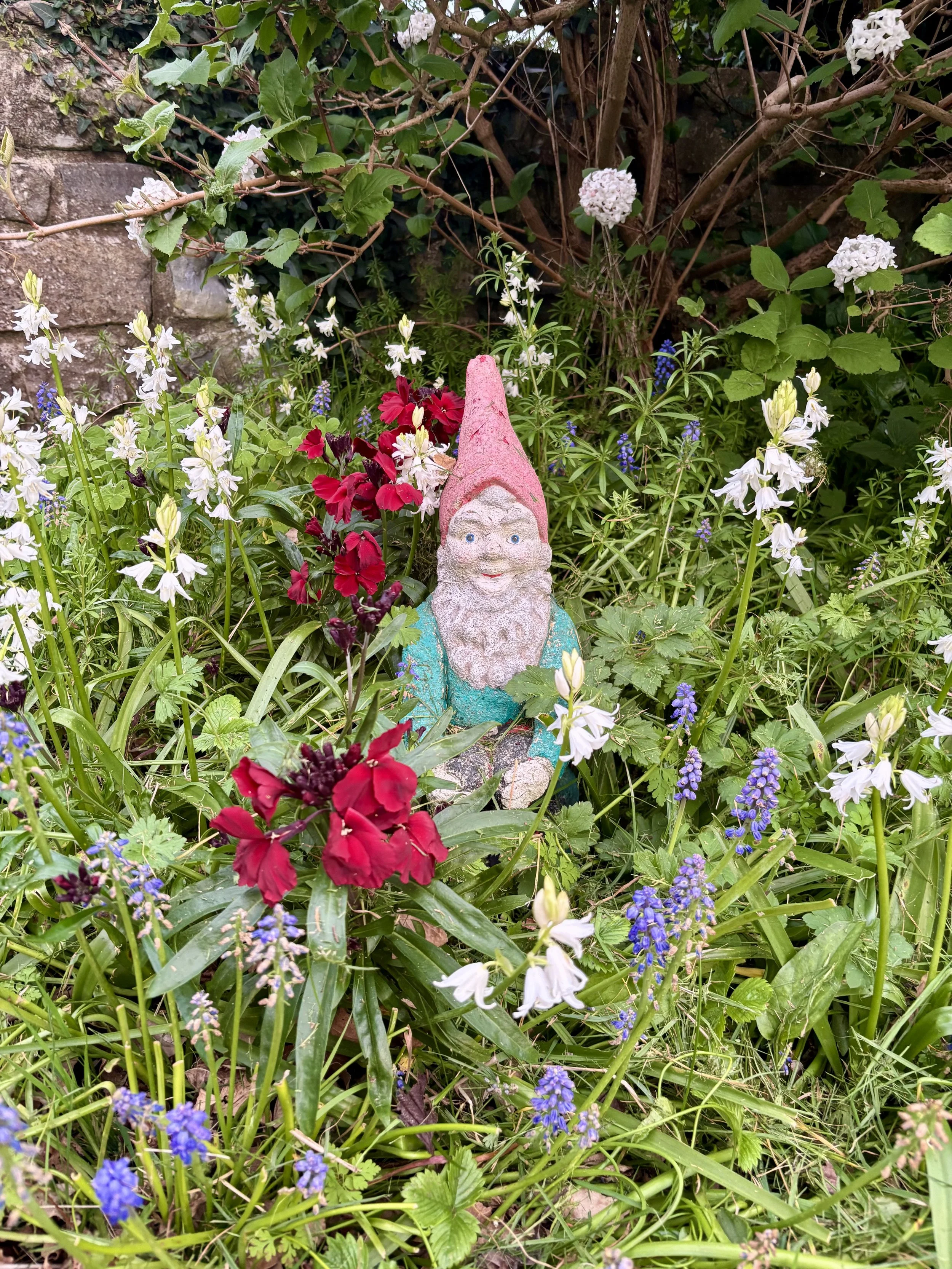
Gardening has taught me to play, to experiment, to adapt and learn from all the many so called failures that can and do take place, often. From planting things in the wrong place, to planting the wrong plants for my soil, or innocently sowing hundreds of Foxglove seeds without realising they would grow into hundreds of Foxglove plants (Hundreds!). The list of mistakes I've made is endless, but without those, I don't think I'd ever have learnt what my garden likes and what certain plants need in order to grow and thrive.
Gardening has become a semi blank canvas, a place to play and co-create. You can't force a garden to grow, you have to work in relationship with the soil, the weather, the insects, the wildlife. I've since learnt that you have to listen to the needs of the plant and the surrounding environment, and that listening takes time - perhaps a whole year cycle (or three) of playing, listening, experimenting, making mistakes, noticing and learning. Mistakes then, when infused with play, just becomes information to learn and grow by.
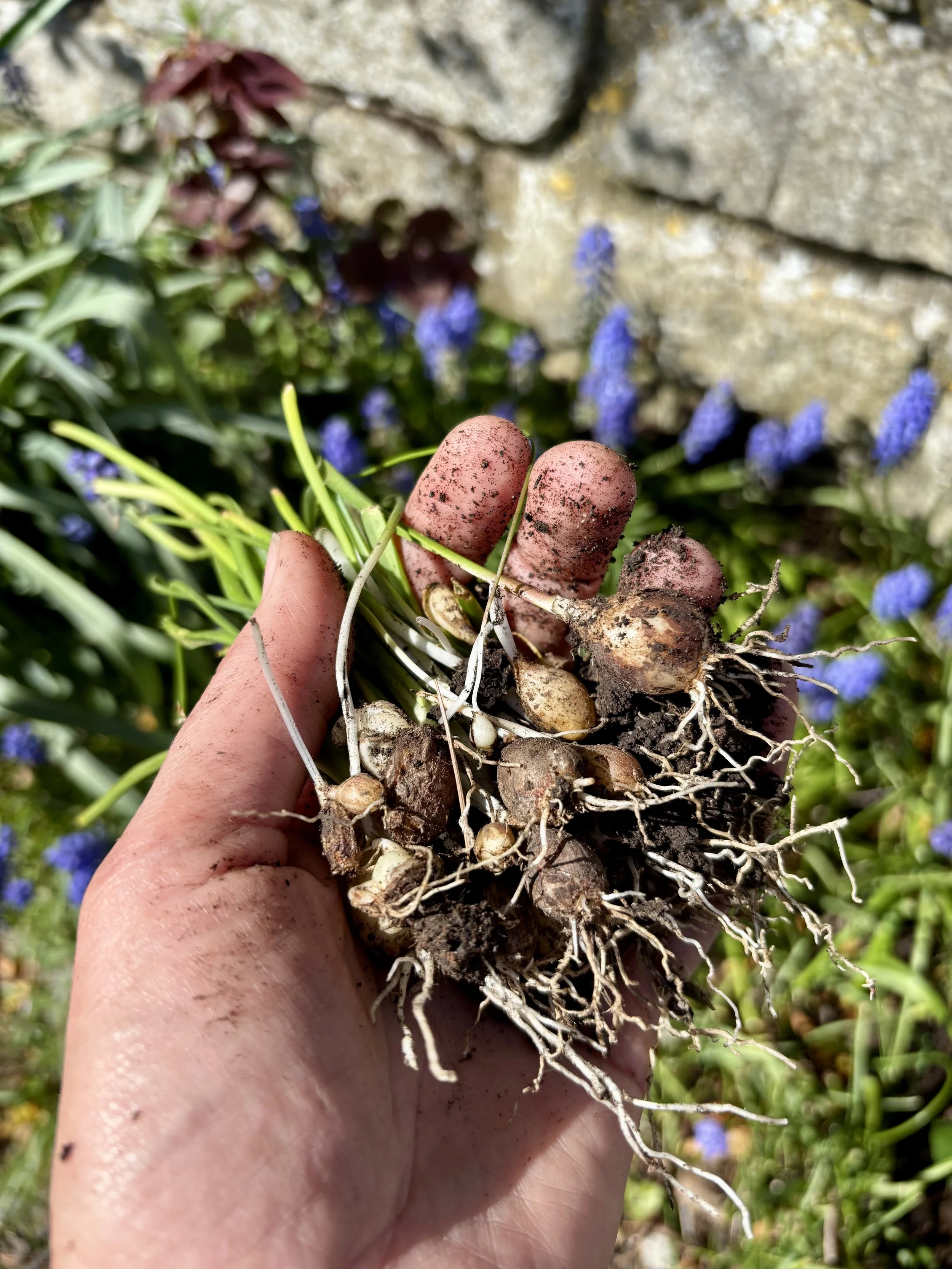
Play is intrinsic to our emotional development and mental health. Through play we develop mental resilience, emotional self regulation, learn the art of relational negotiation, reciprocity and the capacity to adapt and grow with flexibility. And gardening offers us a space to play without the high stakes that we feel can so often dominate our lives in adulthood. And I'm not just talking big country gardens. I grew up in a one bedroom council flat in Holloway where my Mum played endlessly in creating a colourful garden on our tiny shoebox balcony. A window box or a plant on a window sill can still offer us some opportunity to play and co-create with nature.
The other thing I've learnt is how building this capacity to play in the garden spills out into other areas of my life. Namely, it has helped me build the muscle to let go of time frames, to loosen the reigns, to hold my plans lightly, not worry so much about how things will work out and importantly, to trust in life's own mystery and its knack of holding us, supporting us and giving us exactly what we need so that we may also continue to grow and bloom.
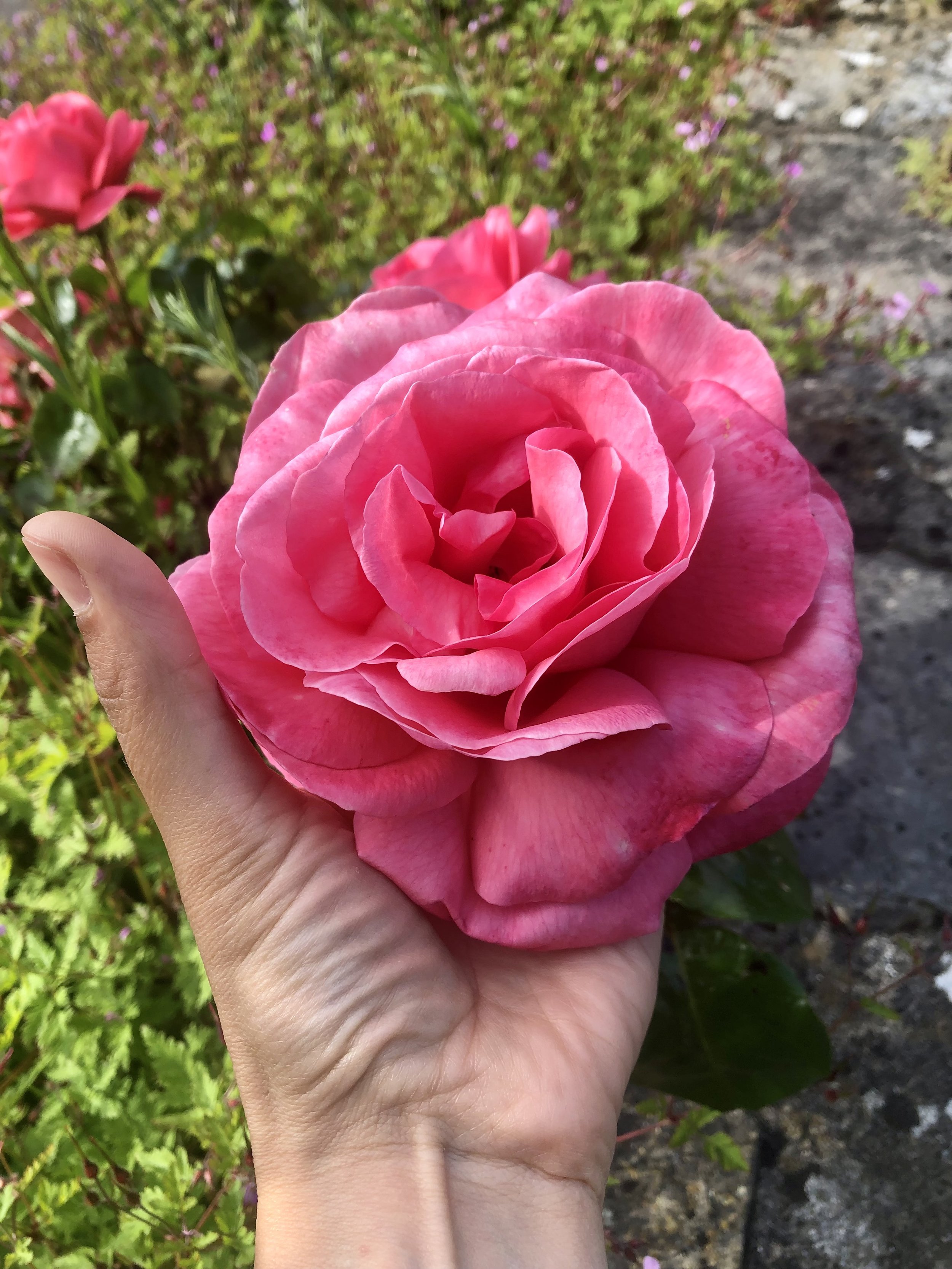
So the hopeless gardener now becomes a wild and playful creative genius! Ok, I may be over egging it slightly but I hope you catch my drift. If I were to take the judgement and criticism out of the term “hopeless” and find the nugget of truth that lies beneath it, I might call it something like feeling unconfident, ill equipped or uncertain. And actually, these are all excellent qualities to have as a gardener, because they make you a humble collaborator, someone willing to cultivate uncertainty rather than trying to control every outcome.
To garden from this place is to stay open, curious and responsive. It means you are not forcing life into a fixed and rigid plan but instead, are entering into relationship with it. Uncertainty invites experimentation; lack of certainty creates room for play. And at this time of life, in the world, with all its insanity and horrors - cultivating uncertainty, playing, creating, imagining, slowing down and regulating are all brilliant gifts that the garden offers us freely and in abundance.