Her Embodied Stories: Loving MySelf

Theme: Loving MySelf

Her Embodied Stories is our new creative venture - birthed by Milena Kadziela and Kate Merrick. It is an invitation for us as women to come together. To learn, unlearn and reclaim our birthright - to love ourselves, fully, intimately, deeply. We will explore and share our stories of what it has meant to be a woman and we will be guided each fortnight by the themes illuminated by the New and Full Moons. 

You can catch our first talk together here. Grab a cuppa, sit back, slow it right down and come join us!

The Menstrual Cycle - a New Chapter

12CB833F-2263-450D-89AD-E501725663B7.JPG

Towards Healing and Wholeness. The Menstrual Cycle: Self Regulation and Self Support for Women by Kate Merrick

Chapter 9 in Michael Clemmens - Embodied Relational Gestalt: Theory and Applications. 2020.

Around the time I began training to become a therapist, I also came off the pill. Exactly three days after stopping, I noticed a dramatic shift in my mood and sensory perception. My hearing was suddenly crystal clear and my vision much sharper. I had put my previous fogginess and flat energy down to some ongoing depressive fug but in that moment, it became apparent to me that it was actually the pill that had been dampening my vitality, my energy, and my life force.

This was the catalyst that then sharply drew my attention to my menstrual cycle and I became immersed in a journey of deep healing, of returning home to my body, to myself - as a woman, with a natural cyclical nature, one that I had denied and been taught to hate for so many years

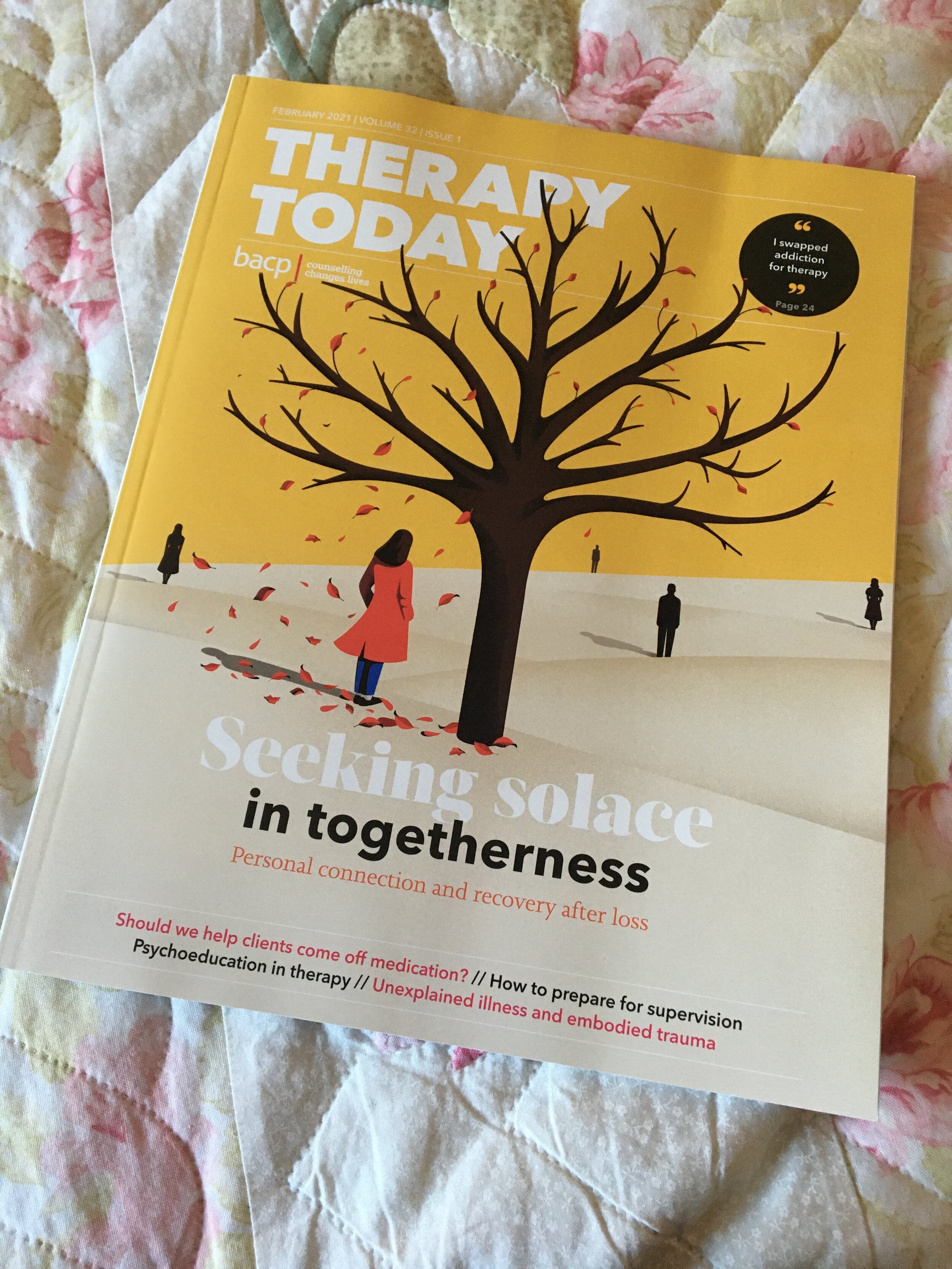
And alongside this deep transformation, I became curious about how the menstrual cycle had never once been mentioned in my personal therapy; in my therapy training or in any of the literature I was studying. And how the menstrual cycle is rarely even considered by therapists when working with female clients, because they simply don’t know much about it. What a loss! And so, in 2014, I wrote a detailed article for a therapy journal, outlining the different phases of a woman’s menstrual cycle and how we might work with it in therapy to support our female clients to become more embodied - supporting them to work with their cyclical rhythm rather than against it. It was harshly critiqued at the time and I was given many points to reconsider and revise. I decided not to revise a thing and it served as a clear reminder as to where we are culturally in relation to women’s blood mysteries. Soon after, I was kindly invited to submit it as an article by the writer and Gestaltist, Michael Craig Clemmens, for his book, “Embodied Relational Gestalt” which has just been published, all these years later.

Thankfully, awareness around Societies pejorative and patriarchal narratives of menstruation has grown and women are getting wise to their natural rhythms and the inherent cyclical wisdom they embody. Goddess willing, this will begin to filter into our therapy rooms too.

Books

Being a huge lover of books, it is not uncommon for me to recommend certain books to clients that I work with. Over the years, I've noticed that I often refer to the same ones as being great therapeutic resources, so I thought I'd list them here too! 

They are, in no particular order: 

When the Body Says No by Dr Gabor Mate - What happens when we struggle to say no or fail to put boundaries in place to protect ourselves from stress and overwhelm? The body says it for us through chronic illness and disease. Gabor Mate explores the stress-disease connection with his signature style of humour and grace. 

The Mindbody Code: How to Change the Beliefs that Limit your Health, Longevity and Success by Dr Mario Martinez - Clinical Neuropsychologist and Biocognitive Science founder Dr. Mario Martinez reveals the way our cultural beliefs impact our immune system, the pathway to healing the archetypal wounds of shame, abandonment, and betrayal, and shines a light on our cultural myths around aging. Practical, deeply insightful and experiential. 

Healing the Shame that Binds You by John Bradshaw - An accessible way to explore personal shame and it's origins, includes a practical workbook section for visualisation work and deeper exploration

Warming the Stone Child: Myths and Stories about Abandonment and the Unmothered Child by Clarissa Pinkola Estes - I particularly love the audio version of this gentle and nurturing journey, that invites us to explore our own experience of childhood neglect and abandonment

Women's Bodies, Women's Wisdom; Creating Physical and Emotional Health and Healing by Dr Christiane Northrup - the go-to bible on holistic women's health. 

Why Therapy Works: Using our Minds to Change our Brains by Louis Cozolino - a great description of why we do what we do in the therapy room, using up to date research in Neuroscience, Neurobiology and Trauma treatment to support the healing and transformations that can take place during the therapeutic process

The Drama of Being a Child: The Search for the True Self by Alice Miller - observing the impact of psychological and physical abuse in childhood and the ways in which we can begin to heal

In the Body of the World by Eve Ensler - this powerful autobiography explores the experience of sexual violence from a female perspective; the impact on a woman's embodied sense of self; as well as this violent intrusion serving as a metaphor for the destruction of the planet

Her Blood is Gold: Awakening to the Wisdom of Menstruation by Ella Owen - for women interested in connecting to their menstrual cycles in a meaningful way; investigating ways to make our periods physically, emotionally and spiritually healthy

Woman Code by Alissa Vitti - A practical step by step guide on how to improve hormonal health holistically by working with the natural rhythms of your body and eating/living in accordance with them


politics in the therapy room: can personal therapy effect social change?

There is currently a big debate happening in the therapy field about the relationship between therapy and politics, the question being - do we as therapists have a duty to raise awareness - not just about the suffering of the individual but about the suffering and injustices of the world at large. Whist we may feel so often overwhelmed by the state of the world, and feel utterly powerless to do anything about it, there is a natural process that seems to take root in the therapy room.

This quote by Pema Chödrön reminds me of the work we do in therapy, as we support clients to begin to turn their attention and curiosity to their inner world – exploring how they respond and relate to others, as well as to themselves.

“If someone comes along and shoots an arrow into your heart, it’s fruitless to stand there and yell at the person. It would be much better to turn your attention to the fact that there’s an arrow in your heart.”

I love the metaphor of attending to the arrows in our hearts - our wounds – and using our energy, love, compassion and awareness in the service of self care and healing. But I’m beginning to see another part to the story...

In therapy, as we attend to healing our own wounds and as our capacity to love and care for ourselves expands, as well as our ability to see our situations and ourselves more clearly, this has a ripple effect outwards. I see many clients, who, having done this crucial work on themselves, begin to see their love and compassion stretch far beyond their own individual needs, as they become more sensitive to the suffering of others, to the environment – without losing or diminishing themselves - and are now well versed in mobilising change.

The process of facing and accepting the injustices of our own lives, allows us to contact and embody our healthy energy of protest and anger. And perhaps it is in this very energetic embodiment that further motivates us to seek justice and resolution out in the wider world. As Caroline Caldwell observed,

“in a society that profits from your self-doubt, liking yourself is a rebellious act.”

This is where I believe therapy can be a great catalyst for change, not just for healing the wounded individual but also, for healing the wounded planet. It seems that the very movement towards caring more deeply for ourselves, paradoxically, can bring us closer to caring more deeply for others and for the world in which we are so intrinsically connected. Perhaps, by attending to those arrows in our hearts, we unwittingly invite ourselves to *wake up, sense our outrage, and act politically!  As we say in Gestalt therapy, 

“a change in one part, affects the whole.”


(*Quote referenced from "We've had a hundred years or psychotherapy and the world's getting worse." By James Hillman and Michael Ventura, 1993.)